Laboratory validation
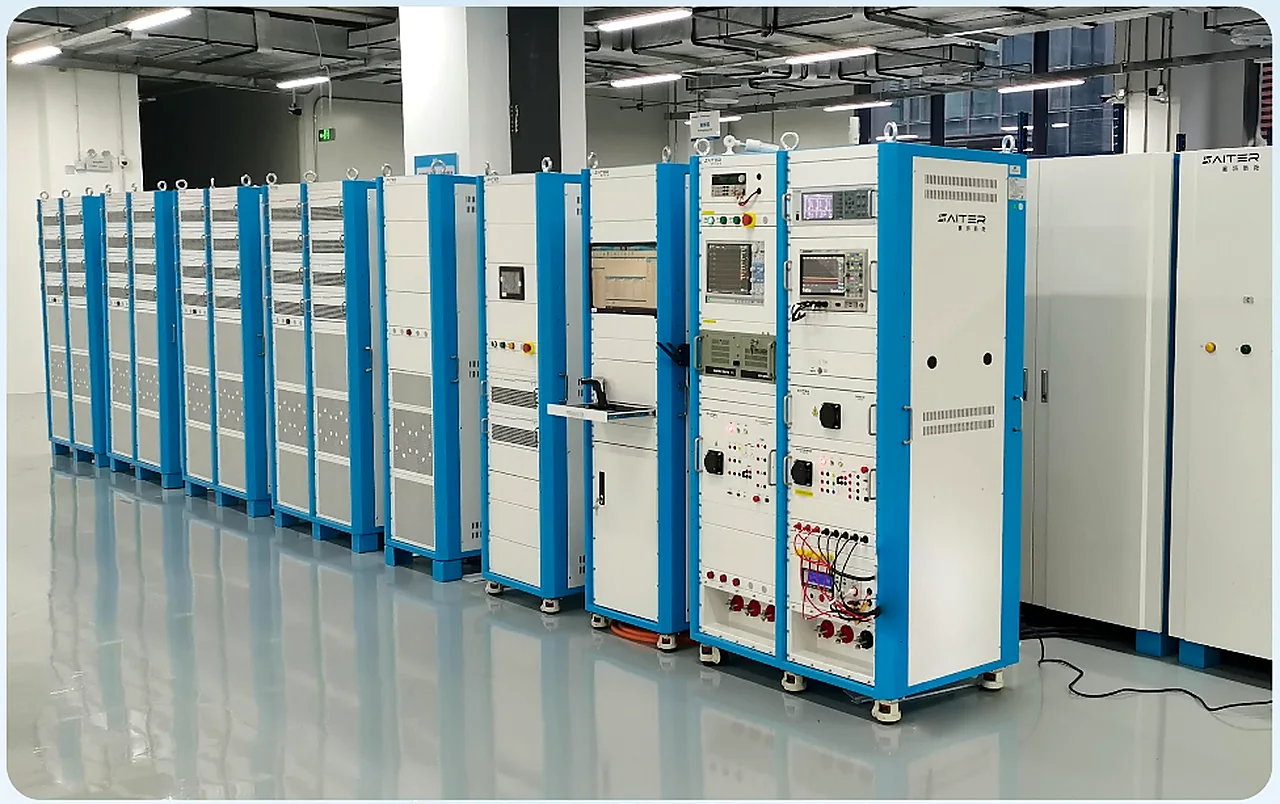
Integrated EV Charger Validation Laboratory Architecture
This laboratory architecture is intended for teams that need repeatable AC or DC charger development and pre-compliance workflows. It starts with the target connector and exact test scope, then coordinates interface simulation, power equipment, measurements, communication capture and reporting around version-controlled test cases.
Reference application architecture
Who this workflow is for
- ✓ EV charger manufacturers
- ✓ Independent and in-house test laboratories
- ✓ Engineering teams preparing for formal validation
Engineering objectives
- ✓ Reproduce normal, boundary and controlled fault sequences
- ✓ Synchronize communication evidence with electrical measurements
- ✓ Retain configurations and results that another engineer can review
Reference system configuration
Final ratings, instruments, options and facility interfaces must be agreed against the actual test plan.
AST-9000 platform
Coordinates the selected charger interface, simulated vehicle workflow and laboratory test sequence.
Interface modules
Match the actual GB/T, CCS2, Type 1, Type 2 or NACS connection and communication scope.
Programmable source and load
Provide the facility-side supply and power-absorption path specified by the test plan.
Measurement and reporting
Capture electrical values, protocol traffic, configurations, limits and repeatable result records.
Suggested execution workflow
- 1
Freeze the test boundary
Record charger hardware and firmware, connector, standards editions, electrical range and required evidence.
- 2
Review the laboratory configuration
Confirm module ratings, external power equipment, protection, communication options and calibration responsibilities.
- 3
Establish a reference session
Run one normal sequence and align requested values, messages, pilot state and measured charger output.
- 4
Execute controlled cases
Apply one boundary or fault condition at a time using documented settings and expected responses.
- 5
Package the evidence
Store setup revisions, raw captures, measurements, limits, results and unresolved observations together.
Expected project outputs
- ✓ Approved equipment and interface configuration
- ✓ Versioned test procedure and case matrix
- ✓ Synchronized communication and electrical records
- ✓ Reviewable result package for engineering or pre-compliance decisions
Confirm before configuration
- ✓ Exact standards and editions
- ✓ Connector and maximum voltage, current and power
- ✓ Included versus external source and load equipment
- ✓ Automation, report and calibration requirements
Relevant equipment
Configure this workflow for your project
Share the charger interface, standards, electrical range, test environment and evidence requirements with an APEX engineer.
Talk to an engineer