APEX technical library

Test-scope and equipment planning for EV charger projects. These materials are not completed customer project records.

Discuss a test requirement
24 materialsUpdated
Material type

7-12 of 24 materials

Application scenarios

6 on this page

Charger manufacturing

CCS2 Laboratory Scope

Plan a CCS2 charger investigation by connecting the required charging sequences to interface simulation, communication capture and the electrical power path.

CCS2 charger testing guide
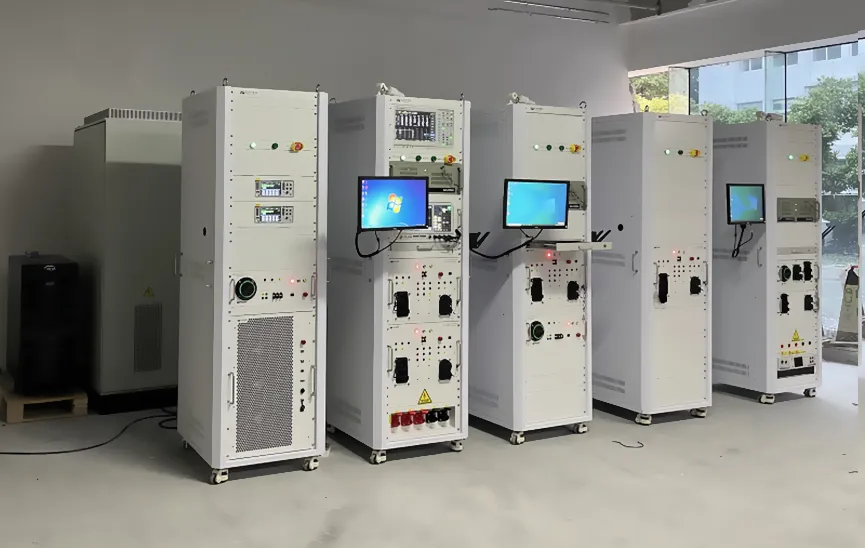
Multiple charging-test cabinets
Planning checklist

Requirements to confirm

  • Identify the charger revision, CCS2 connection and communication modes under review.
  • Separate connector ratings, measured output and sustained-load requirements.
  • Define normal and controlled fault cases with expected responses and retained evidence.

Review output

A CCS2 scope sheet with an equipment boundary and case-level evidence list.

Scope: Interface simulation alone does not establish sustained full-power operation or complete standards coverage.

Technical context

Public inspection

Charging-Site Fault Diagnosis

Organize a field investigation around one reported charging condition, keeping site identity, setup and the first divergent session state together.

Field equipment planning guide
Planning checklist

Requirements to confirm

  • Record the installed asset, reported symptom and conditions needed to reproduce it.
  • Confirm connector access, safety authority and the energy path for permitted checks.
  • Capture a normal reference and the affected sequence using consistent measurement points.

Review output

A diagnostic visit record with observations, setup limitations and escalation actions.

Scope: A field investigation records the conditions checked; it does not establish fault-free operation outside that scope.

Technical context

Public inspection

Interoperability Scope Review

Define which vehicle-side and charger-side implementations belong in an interoperability review, then select reproducible interactions rather than an unrestricted compatibility claim.

Protocol scope planning guide
Planning checklist

Requirements to confirm

  • List interface types, communication implementations and hardware or firmware combinations.
  • Choose session transitions, boundary values and controlled exceptions for comparison.
  • Define the evidence needed to distinguish a setup issue from an interaction mismatch.

Review output

A bounded interoperability matrix with configuration identifiers and open assumptions.

Scope: Coverage applies only to the configurations and cases selected for review; no universal interoperability outcome is implied.

Technical context

Independent testing

Type 2 and CCS2 Interface Plan

Separate Type 2 AC and CCS2 DC requirements before planning an evaluation. Map each electrical, pilot and communication question to the appropriate setup.

Standards validation preparation guide
Planning checklist

Requirements to confirm

  • Identify whether Type 2 AC, CCS2 DC or both interfaces fall within the requested scope.
  • Record applicable standards editions, connector ratings and required observations.
  • Assign measurements, stimulation and verdict rules separately for each interface.

Review output

An interface-specific evaluation matrix with equipment and evidence responsibilities.

Scope: An interface designation is not a conformity result; formal assessment scope requires separate agreement.

Technical context

Independent testing

Third-Party Measurement Plan

Translate a charger measurement request into observable quantities, operating conditions and a reviewable record before choosing instruments or report fields.

Measurement and evidence checklist
Planning checklist

Requirements to confirm

  • Define each quantity, operating point, reference method and required measurement range.
  • Review instrument suitability, calibration responsibilities and relevant uncertainty inputs.
  • Link each reported value to the setup, limits, raw record and configuration revision.

Review output

A measurement plan and report-field map for independent technical review.

Scope: The plan does not assert laboratory accreditation, measurement accuracy or a completed verification result.

Technical context

Independent testing

Charging Power Scenario Planning

Describe the requested charging duty as a sequence of setpoints and transitions, keeping simulated demand separate from measured charger output and site power constraints.

Load and energy-path planning guide
Planning checklist

Requirements to confirm

  • Specify requested voltage, current, duration, transitions and initial conditions.
  • Confirm the source, load and cooling envelope for each proposed operating point.
  • Define where commands and measured power need synchronized recording.

Review output

A power-scenario table with facility constraints and measurement responsibilities.

Scope: Scenario planning does not establish energy savings, charging-time improvements or sustained power capability.

Technical context

Confirm the equipment configuration

Interfaces, software, instruments, loading and integration are subject to the agreed project scope. Published model specifications remain the equipment baseline.

WhatsApp